


Roll over image to zoom in
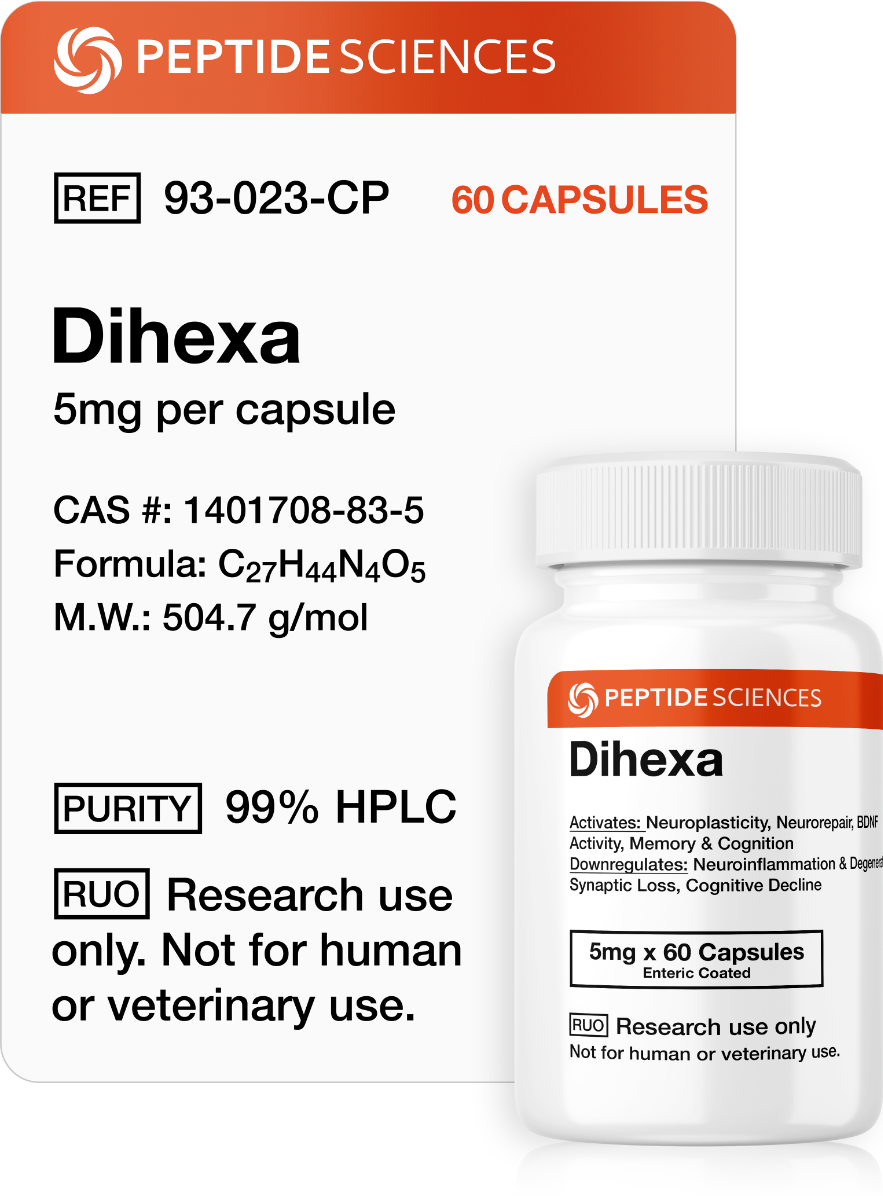
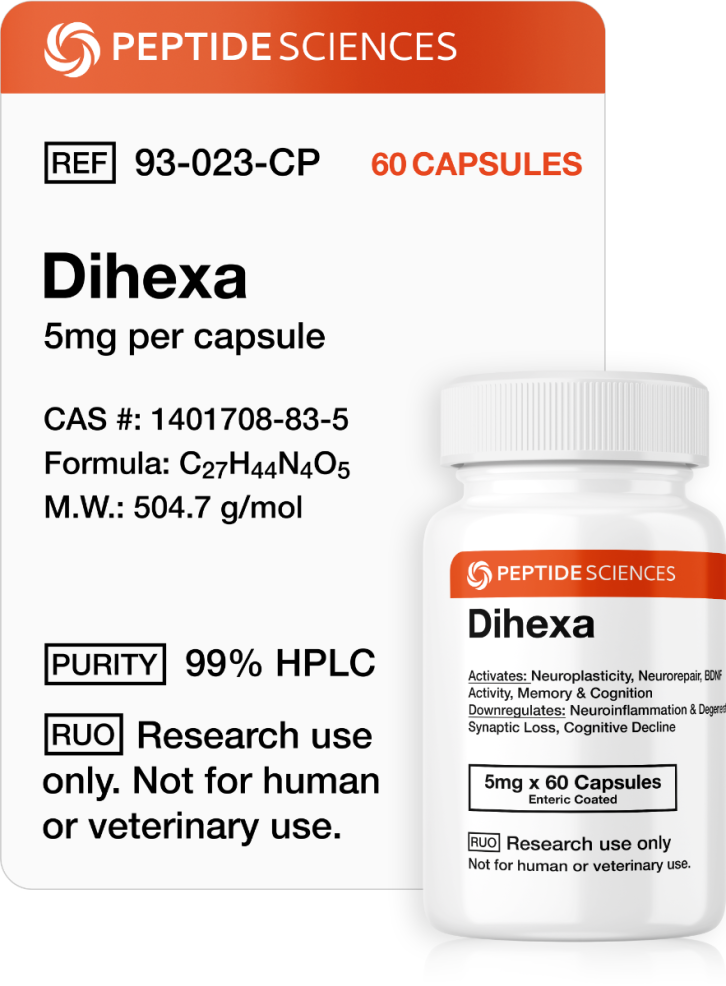
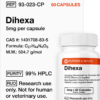
Dihexa (5mg x 60 Capsules = 300mg)
$195.00
Dihexa: Overview
Dihexa is a modified oligopeptide derived from angiotensin IV. It binds to hepatocyte growth factor (HGF) and enhances its activity at the c-Met receptor. Dihexa is currently being investigated in animal models for its potential to improve cognition in neurodegenerative conditions such as Alzheimer’s disease. What makes Dihexa particularly remarkable is its ability to promote neuron growth at a rate approximately seven orders of magnitude greater than that achieved by brain-derived neurotrophic factor (BDNF)[1]. In other words, Dihexa appears to supercharge neuron growth well beyond normal physiological levels.
Dihexa: Structure

Source: PubChem
Amino Acid Sequence: Hexanoyl-Tyr-Ile-Unk (N-Hexanoyl-L-tyrosyl-N-(6-amino-6-oxohexyl)-L- isoleucinamide)
Molecular Formula: C27H44N4O5
Molecular Weight: 504.7 g/mol
PubChem CID: 129010512
CAS No: 1401708-83-5
Synonyms: N-hexanoic-Tyr-Ile-(6) aminohexanoic amide, PNB-0408, fosgonimeto
Dihexa: Research
What Is Dihexa?
Dihexa is a short peptide analogue of angiotensin IV. Angiotensin IV itself is a hexapeptide derived from the larger angiotensin II, a potent vasoconstrictor. Angiotensin IV has been shown to enhance learning and memory in animal models and is thought to interact with insulin-regulated aminopeptidase (IRAP). IRAP—also known as oxytocinase—may also interact with the c-MET receptor in the liver.
IRAP is a transmembrane protein whose effects vary depending on the tissue in which it is expressed. In fat and muscle cells, IRAP plays an important role in glucose uptake and storage, mediated through the GLUT4 receptor. In the brain, IRAP cleaves both vasoactive peptides and neuropeptides. These neuropeptides are involved in the development of neurological disorders such as schizophrenia and memory impairments, as well as in learning and cognitive processes. In short, IRAP appears to play a fundamental role in neurological function within the central nervous system[2].
In the brain, IRAP serves as a major receptor for angiotensin IV—and by extension, for Dihexa. Analogues of this peptide have been shown to enhance cognitive function and protect neurons from excitotoxic injury. There is also growing interest in exploring angiotensin IV analogues for the treatment of seizures[3].
The other major function of IRAP is in the regulation of the immune systems. IRAP has a primary function in cross-presentation, which is the process the immune system uses to generate antibodies to invading pathogens[4]. It is also critical in the secretion of proinflammatory cytokines TNFα and IL-6 by mast cells[5].
The other receptor that Dihexa binds to is c-MET, also known as the hepatocyte growth factor (HGF) receptor. The c-MET protein possesses tyrosine kinase activity and plays important roles in embryonic development and wound healing. It has been shown to be critical for the development of blood vessels, muscle cells (including cardiomyocytes), and nerves. It also plays a key role in bone remodeling[6].
Recent research indicates that reduced c-MET signaling is associated with autism. These findings have led scientists to discover that c-MET plays a critical role in synapse formation in the central nervous system. Lower levels of c-MET may impair the development of key brain circuits involved in social and emotional behavior[7].
Taken together, these findings suggest that Dihexa is a potent regulator of neurogenesis and cognitive function. In animal studies, Dihexa has been shown to stimulate neuron growth and synapse formation with a potency approximately seven orders of magnitude greater than that of brain-derived neurotrophic factor (BDNF). To clarify, this means Dihexa is not merely seven times more effective, but 10 million times more potent than BDNF in promoting neuronal growth.
Dihexa and the Brain
The primary research interest in Dihexa has focused on its effects on the brain and central nervous system. Researchers initially developed the compound to improve cognitive function in neurodegenerative diseases such as Alzheimer’s and Parkinson’s. Interestingly, the development of Dihexa was not driven by an effort to create a new therapeutic, but rather by a desire to answer a scientific question. For years, scientists had observed a link between angiotensin IV and improved brain function in the context of dementia. Cognitive researchers recognized an angiotensin IV (AT4) receptor complex but did not fully understand its biological significance—specifically, what it regulated or what its downstream effects were.
Many hypothesized that the AT4 receptor was the same as the hepatocyte growth factor (HGF)/c-MET receptor system. To explore this possibility, scientists created several small-molecule AT4 analogues capable of crossing the blood-brain barrier. These peptides provided strong evidence supporting the idea that the AT4 receptor is very likely identical to the HGF/c-MET receptor complex. One of the molecules developed during this research process was Dihexa[3].
Until the development of Dihexa, the hepatocyte growth factor (HGF)/c-MET receptor system was an underexplored therapeutic target in the investigation of Alzheimer’s disease (AD). While researchers had long known that activation of the c-MET receptor promotes various cellular processes—including mitogenesis, motogenesis, morphogenesis, and stem cell differentiation—it wasn’t until the confusion surrounding the AT4 receptor and the HGF/c-MET receptor was clarified that the neurogenic and neuroprotective properties of this pathway became better understood.
As it turns out, the mitogenic effects of this system extend to multiple cell types, including neurons. Recent studies have shown that stimulation of this pathway by N-hexanoic-Tyr-Ile-(6)-aminohexanoic amide (Dihexa) induces dendritic arborization and synaptogenesis. In animal models, Dihexa has demonstrated promise in enhancing the formation of new, functional synaptic connections and improving memory consolidation in AD. Notably, Dihexa is orally active, crosses the blood-brain barrier, and supports both memory consolidation and retrieval.[8].
It is important to note that scientists have been exploring the potential of Dihexa for quite some time. What truly jumpstarted recent research was the realization that AT4 receptors are, in fact, hepatocyte growth factor (HGF)/c-MET receptors. For years, researchers have understood that the renin-angiotensin system (RAS) can negatively affect hypertension and contribute to neuroinflammation. ACE inhibitors, for example, have long been used to restore cerebral blood flow after stroke and to prevent tissue remodeling. It has also been known that activation of the RAS disrupts memory consolidation and retrieval.
Angiotensin IV has been shown to counteract these damaging effects of RAS activation. However, it was largely overlooked because developing analogues capable of crossing the blood-brain barrier proved challenging. Dihexa changed that outlook by demonstrating that a small peptide could be engineered to penetrate the blood-brain barrier and bind effectively to the HGF/c-MET receptor.
Current research suggests that the AT4 receptor subsystem of the RAS interacts with brain matrix metalloproteinases to modify the extracellular matrix. This remodeling enables synaptic changes critical for neural plasticity. The process is believed to underlie not only memory formation but also retrieval. In short, AT4 provides the scaffolding that allows neurons to grow and interconnect, facilitating the entire cognitive process[9]. Dihexa, as mentioned is an extremely potent, orally available analogue of AT4 that basically supercharges the construction of this extracellular matrix scaffolding and thus provides robust structure on which neurons can grow.
Dihexa and Alzheimer’s Disease
The evidence above makes it clear that Dihexa plays an important role in neuron and synapse development. Since synapse and neuron loss are hallmarks of diseases like Alzheimer’s, it is not surprising that researchers have tested Dihexa in mouse models of dementia. Results indicate that Dihexa can rescue cognitive impairment and even recover memory that was previously thought to be lost. In other words, Dihexa represents the first potential Alzheimer’s treatment that may not only slow disease progression but also partially reverse it.
Mice treated with Dihexa show increased levels of angiotensin IV, along with restored spatial learning and cognitive function. These behavioral improvements are supported by histological studies showing increased neuronal cell counts and elevated levels of synaptophysin (SYN), a key protein component of synaptic vesicles—the microstructures neurons use to communicate. Additionally, scientists observed increased activation of astrocytes and microglia, alongside reduced levels of the inflammatory cytokines IL-1β and TNF-α, and increased levels of the anti-inflammatory cytokine IL-10[10].
All of these changes not only indicate a slowing or halting of dementia progression but also suggest a reversal of the disease process. The reduction in inflammatory cytokines reflects a resolution of inflammation, while the increased activation of astrocytes and microglia points to a restoration of their function. This restoration is supported by the mice regaining previously lost cognitive abilities. Additionally, microglia and astrocytes play a crucial role in regulating inflammatory cytokine levels in the brain, so the normalization of their activity suggests an improvement in at least one key aspect of dementia pathology.
Dihexa and Peripheral Nerves
The benefits of Dihexa are not limited to the central nervous system. Research in rat models of sciatic nerve injury has shown that Dihexa can also promote the regrowth and healing of peripheral nerves. In one study, rats with sciatic nerve damage experienced nearly complete restoration of nerve function after just eight weeks of Dihexa administration[11].
The benefits of Dihexa are even greater when combined with mesenchymal stem cell (MSC) therapy. For years, MSCs have been investigated as a potential source of raw material for wound healing in general and nerve repair specifically. Unfortunately, these efforts have had limited success because inducing the stem cells to differentiate in a beneficial way has proven challenging. Dihexa appears to overcome this obstacle by promoting the differentiation of MSCs toward the nerve cell lineage[12]. The combination of MSCs with granulocyte-colony stimulating factor (G-CSF) and Dihexa has been shown to drastically improve recovery from peripheral nerve injury.
Dihexa Administration
Due to its small size and electrical charge, Dihexa has no problem crossing the mucosal barrier of the GI tract and entering the bloodstream. Many compounds can achieve this feat, however. The real difficulty for most compounds is in crossing the blood-brain barrier intact. Dihexa employs a specific technique that requires the creation of Nle1-AngIV–derived N-terminal tri- and tetrapeptides. This specific configuration, of which Dihexa would be a Nle1-AngIV–derived N-terminal tripeptide, allows the peptide to cross the blood-brain barrier intact[13]. This, in combination with several structural changes directed at the N-terminal end of the peptide, including the substitution of d-norleucine for l-norleucine, the N-acetylation of norleucine, and the replacement of norleucine with the non-α-amino acid γ-aminobutyric acid (GABA) results in reduced susceptibility to aminopeptidases and overall improved bioavailability of Dihexa. Thus, Dihexa is as active in its oral formulation as it is via Sub-Q administration, making it an easy compound to administer and study in laboratory settings.
Dihexa Summary
Dihexa is a modified oligopeptide derived from angiotensin IV that acts on the hepatocyte growth factor/c-MET receptor to promote neuron growth and synaptogenesis. Animal studies have shown that Dihexa can improve cognition in neurodegenerative diseases such as Alzheimer’s and Parkinson’s by enhancing neuron growth and synapse formation in brain regions responsible for memory and learning. It has also been demonstrated to stimulate peripheral nerve cell growth and, when combined with mesenchymal stem cells, can accelerate nerve regeneration—reducing the time to functional recovery from months or years to just weeks. Dihexa is highly bioavailable in its oral form and easily crosses the blood-brain barrier, making it convenient to dose and administer. While there is currently no research specifically investigating Dihexa’s nootropic properties, its potent stimulation of neuron growth suggests it could potentially be a highly effective nootropic.
About The Author
The above literature was researched, edited, and organized by Dr. Logan, M.D. Dr. Logan holds a doctorate degree from Case Western Reserve University School of Medicine and a B.S. in molecular biology.
Scientific Journal Author
John Wright, Ph.D. is a professor of psychology who teaches courses including Research Design, Teaching Psychology, and Physiological Psychology. His research interests include Alzheimer’s disease, Parkinson’s disease, stroke-related motor dysfunctions, and the neurochemistry of memory consolidation. Dr. Wright has published extensively on these topics, with notable contributions addressing the role of matrix metalloproteinases and cell adhesion molecules in learning and addiction, the neurochemical basis of nicotine-induced behaviors, and the development of multi-target-directed ligands for the treatment of Alzheimer’s disease. He has also authored invited chapters and reviews on the brain renin-angiotensin system and therapeutic approaches for central nervous system disorders..
Dr. Wright.is referenced as one of the leading scientists involved in the research and development of Dihexa. In no way is this doctor/scientist endorsing or advocating the purchase, sale, or use of this product for any reason. There is no affiliation or relationship, implied or otherwise, between Peptide Sciences and this doctor. The purpose of citing the doctor is to acknowledge, recognize, and credit the exhaustive research and development efforts conducted by the scientists studying this peptide. Dr.Wright is listed in [3] under the referenced citations.
Referenced Citations
ALL ARTICLES AND PRODUCT INFORMATION PROVIDED ON THIS WEBSITE ARE FOR INFORMATIONAL AND EDUCATIONAL PURPOSES ONLY.
The products offered on this website are furnished for in-vitro studies only. In-vitro studies (Latin: in glass) are performed outside of the body. These products are not medicines or drugs and have not been approved by the FDA to prevent, treat or cure any medical condition, ailment or disease. Bodily introduction of any kind into humans or animals is strictly forbidden by law.

by Gabriella Scott (verified owner)
“The quality is still there.”
by Hunter Perry (verified owner)
“The packaging was lowkey and secure. No problems during delivery at all.”
by Harper Walker (verified owner)
“The new site works great and the delivery was quick. Still getting that number 1 quality from Peptide Sciences.”
by Vinicius Lima (verified owner)
“Peptide Sciences delivered again.”