
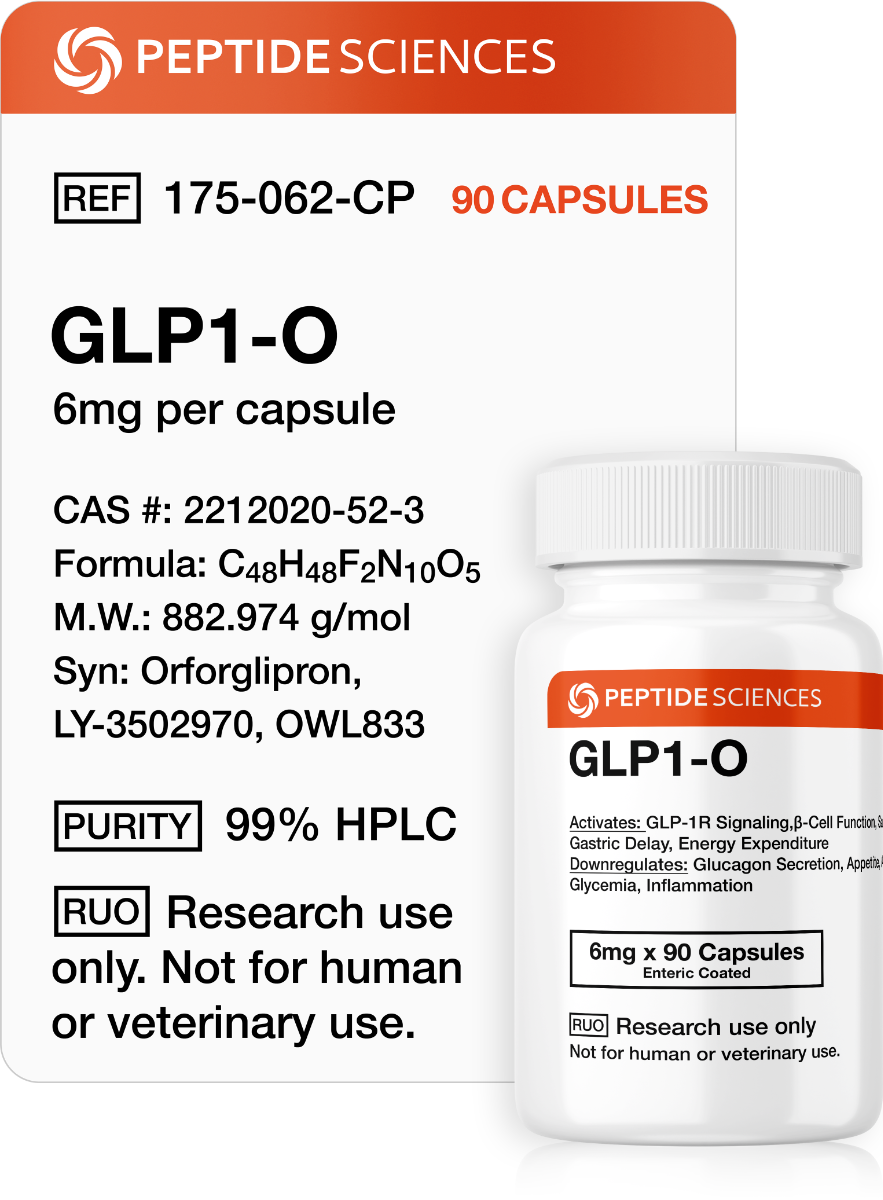


GLP1-O (6mg x 90 Capsules = 540mg)
$290.00
GLP1-O: Overview
GLP1-O is a non-peptide GLP-1 receptor agonist. It is like compounds like semaglutide and liraglutide but differs from those peptides in the fact that it is a small non-peptide molecule with excellent oral bioavailability. In trials, GLP1-O has shown weight loss ranging from 8.6% to 12.6% of total body mass over a 26-week period and upwards of 14.7% over 36 weeks. Average weight loss in clinical trials has been on the order of 16 pounds over 40 weeks. Participants showed obvious changes in waist circumference averaging 5.32 cm or roughly two inches [1] .
Besides weight, other metabolic markers of health have been investigated in GLP1-O trials. Trials indicate that this compound reduces total cholesterol, LDL cholesterol and ALT (liver enzyme) levels. Fasting serum glucose (blood sugar) levels are decreased by 23 to 44 mg/gL and hemoglobin A1C levels are reduced as well [2] . As a result of these outcomes, GLP1-O is under direct investigation as a therapeutic for managing diabetes and weight loss.
Of note, GLP1-O is the only orally available GLP-1 receptor agonist other than semaglutide. Whereas semaglutide requires an absorption enhancer (sodium N-(8-[2-hydroxybenzoyl] amino) caprylate) to improve its uptake and must be taken on an empty stomach, GLP1-O does not have these restrictions. It is the first oral GLP-1 agonist being researched with high bioavailability.
GLP1-O: Structure

Source: PubChem
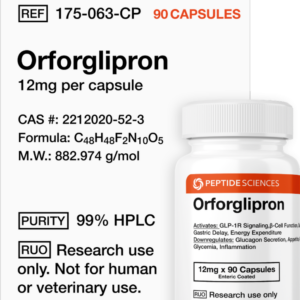
Chemical Formula: C48H48F2N10O5
Molecular Weight: 882.974 g/mol
PubChem CID: 137319706
CAS No.: 2212020-52-3
Synonyms: LY-3502970, OWL833
What Is GLP1-O?
GLP1-O is a small-molecule partial agonist of the GLP-1 receptor. Its activity at the GLP-1 receptor is characterized primarily by cyclic AMP (cAMP) signaling (g-protein coupled receptor activity) and less-so by β-arrestin activity. The cAMP activity is primarily responsible for the induction of glucose metabolism, slowed gastric emptying, and satiety signaling associated with GLP-1 agonists. It is also what promotes beta cell survival and proliferation while inhibiting glucagon release. Thus, cAMP activation is responsible for all the benefits associated with GLP-1 agonists like GLP1-O and semaglutide.
β-arrestin signaling is generally associated with adaptation to persistent stimulus. In the case of therapeutics, this can lead to the phenomenon of tachyphylaxis. In tachyphylaxis, increasing doses of a therapeutic are required to achieve the same effects over time because receptors become desensitized. In extreme cases, this can lead to the need for breaks whereby consumption is stopped for a period to allow the body to “reset.” Because GLP1-O does not have much β-arrestin activity, it is thought that desensitization to the compound will be less likely to occur. This is important because increasing dosages to achieve desired effects generally exacerbates side effects. It is thought that GLP1-O has fewer and less serious side effects than other GLP-1 receptor agonists for precisely this reason.
The oral bioavailability of semaglutide, even when combined with an absorption enhancer, is just 0.4 – 1%. While this will be effective in inducing weight loss, it is important to note that it will NOT be effective in achieving the same weight loss and glucose control seen in trials of SubQ administered semaglutide. Additionally, to achieve that 1% uptake, the oral version of semaglutide needs to be taken on an empty stomach with a proscribed volume of water before consumption of food in the morning. GLP1-O gets around these restrictions due to its unique structure. Research in cynomolgus monkeys shows an oral bioavailability of 21 to 28%. In all other ways, including lowering blood sugar, suppressing appetite, and reducing body weight GLP1-O shows similar outcomes to the currently marketed peptides semaglutide and liraglutide[3]. As a result of its excellent bioavailability and long half-life, GLP1-O can generally be administered orally once per day.
GLP1-O: Research
GLP1-O and Weight Loss Research
Obesity and being overweight are chronic conditions that result from changes to our diet, access to high-density food items, and several unknown factors. Unfortunately, carrying excess weight, which affects more than 1 billion people worldwide, is a major contributor to a premature decline in health. Obesity increases the odds of everything from diabetes and heart disease to cancer and dementia. It should come as no surprise that the medical community has long sought an effective means of inducing weight loss. Several approaches have been tried, but they have turned out to be ineffective or even dangerous. Hope of a pharmacological approach to weight loss was nearly abandoned before the advent of GLP-1 agonists like semaglutide. Now, renewed interest in the GLP-1 receptor is driving innovation in the weight loss industry.
GLP1-O is a GLP-1 agonist, but it differs from the compounds that came before it by not being a peptide. As noted, GLP1-O is a small-molecule partial agonist of the GLP-1 receptor. Its activity, as discussed previously, is biased toward G-protein activation rather than β-arresting recruitment. This makes GLP1-O highly potent and highly selective. Its unique binding pocket on the GLP-1 receptor explains much of this enhanced efficacy profile.
GLP1-O shows highly selective enhanced activity at the GLP-1 receptor due to its unique structure and composition. It is also more likely to reach the GLP-1 receptor due to these same structural features. To date, incretins like semaglutide have had limited oral bioavailability. This is primarily due to enzymatic degradation in the gastrointestinal (GI) tract and the poor permeability of intestinal epithelial cells to intact peptides, both of which are defense mechanisms that serve living organisms well in most situations. Unfortunately, these defense mechanisms reduce oral absorption of most peptide drugs.
GLP1-O is a chemically synthesized, non-peptide oral GLP-1 receptor agonist (GLP-1RA) designed to overcome the limitations of existing GLP-1 agonists. In a 28-day multiple-dose Phase 1 study, once-daily dosing of GLP1-O —administered in both fed and fasted states (fasted when pharmacokinetic or pharmacodynamic sampling was needed)—led to significant weight reduction, comparable to results seen with injected semaglutide in healthy participants. As noted, the average weight loss is 16 pounds over 40 weeks with a reduction in waist circumference of more than 5 cm.
Unlike semaglutide, which has low oral bioavailability (0.4% to 1%) and requires fasting to achieve adequate systemic exposure, GLP1-O demonstrated much higher oral bioavailability (approximately 20%–40%, based on preclinical data)[4]. Food consumption appears to have very little effect on the bioavailability of GLP1-O [5].
GLP1-O in Diabetes Research
GLP-1 receptor agonists are of particular interest in the treatment of diabetes. GLP-1 stimulation can enhance insulin secretion from the pancreas and, more importantly, has been shown to prevent beta-cell apoptosis. Stimulation even increases the formation of new beta cells, thus making GLP-1 receptor stimulation one of the only known mechanisms for reversing diabetes. While most existing diabetes treatments seek only to increase insulin sensitivity or secretion, GLP-1 agonists preserve pancreatic function. This fact makes GLP-1 agonists critical to protecting natural insulin responses and thus normal glucose physiology. This can drastically reduce the long-term effects of diabetes such as cardiovascular disease, kidney disease, and peripheral vascular disease.
Research shows that GLP1-O can reduce A1c values by as much as 2.1% over a 26-week period. This makes GLP1-O significantly more effective than existing diabetes treatments such as metformin and dulaglutide[6], [7]. Compared to placebo, GLP1-O shows decreases in A1c levels and fasting plasma glucose levels while simultaneously showing an increase in fasting plasma insulin levels[8]. As a bonus, GLP1-O appears to have no obvious effect on the odds of severe hypoglycemia. This side effect is often a limiting factor in diabetes treatment. A compound without significant risk of hypoglycemia is considered to have a better safety profile as hypoglycemia can be life-threatening[9].
GLP1-O and Cardiac Research
There are several ways to measure cardiovascular risk. Cholesterol and lipid levels provide excellent screening markers while more advanced studies like CT angiography and cardiac ultrasound are used in the setting of suspected disease to determine treatment. Research has shown that lowering cardiovascular risk factors like high cholesterol, hyperlipidemia, and hyperglycemia can improve long-term outcomes. Doctors have thus long targeted these markers using various medications, lifestyle changes, and sometimes surgery. Incretin peptides, like semaglutide, have shown great benefit not only in lowering blood sugar levels, but in addressing cholesterol and lipid levels as well.
In animal trials of GLP1-O , decreases in total cholesterol, low density lipoprotein (LDL), very low-density lipoprotein (VLDL), and triglycerides were observed at all doses. Each of these reductions is independently associated with an improvement in cardiovascular outcomes but combined they can make a significant difference in risk of future heart attack, stroke, kidney disease, and more.
After 26 weeks of treatment, changes in markers of cardiac health were as follows:
- Total cholesterol: -2.1% to -8.0%
- LDL: -3.7% to -14.3%
- VLDL: -7.1% to -16.4%
- Triglyceride: -8.4% to -16.6%
Additionally, in some test subjects (though not all) HDL levels were increased. HDL is sometimes referred to as “good cholesterol” because high levels of HDL are associated with improved cardiovascular outcomes such as reduced risk of atherosclerosis (hardening of the arteries), heart attack, and stroke.
Research also shows that GLP1-O decreases levels of apolipoprotein B (ApoB) in the blood. ApoB is associated with increased risk of atherosclerosis and increases autoimmune inflammation in the vasculature. It is thought to be the primary driver of plaque formation in the arteries and a major risk factor heart attack, stroke, and kidney disease. In early testing, GLP1-O reduced levels of ApoB by 8.3 to 12.2%, making it one of the most effect treatments against ApoB that has been tested[10].
It is important to note that GLP1-O can improve cardiac outcomes even in non-obese individuals. This is critical because it shows that the compound’s benefits are not strictly linked to weight loss. In a study of normal weight individuals, GLP1-O lowered blood pressure, CRP levels, cholesterol, LDLD, and triglyceride levels significantly enough to alter long-term risk factors for heart attack and stroke[10].
Another important note to make regarding incretins is that they tend to raise heart rate. This is also true for GLP1-O. Research indicates that this increase in heartrate is generally mild and that the benefits of GLP-1 agonists vastly outweigh the increased heartrate associated with them.
GLP1-O and Inflammation Research
A compound known as C-reactive protein (CRP) has long been associated with increased inflammation in the body. It is often used in clinical settings as a marker for inflammation and as a means of assessing the effectiveness of treatments for everything from heart disease to arthritis to autoimmune disease. In trials of GLP1-O, levels of CRP dropped by significant percentages (26-39.3%)[10]. Lowering CRP levels have been associated, in multiple different studies, with
- Decreased cardiovascular events (e.g. heart attack and stroke),
- Decreased arthritis severity,
- Decreased risk of neurodegenerative disorders,
- Improved wound healing,
- Decreased mortality,
- Thinner blood, and
- Improved outcomes following surgery[11].

The ability of GLP1-O to reduce CRP levels may turn out to be its greatest benefit of all. Additional research needs to be carried out to determine the extent of the benefit. That said, reduced CRP levels can mean lower risk of cancer, arthritis, inflammatory bowel disease, heart disease, stroke, dementia, and so much more. In fact, lowering inflammation has been associated with increases in longevity and is one of the primary targets of anti-aging therapies.
GLP1-O Summary
GLP1-O is a non-peptide, partial agonist at the GLP-1 receptor. Its major advantages against other GLP-1 agonists are two-fold.
- GLP1-O is highly orally bioavailable. There are no food or timing restrictions with GLP1-O and it can be taken once per day by mouth.
- GLP1-O is a partial agonist with mostly g-protein coupled receptor activity. Because of this partial binding mechanism, GLP1-O produces all the desired effects of GLP-1 agonists without the potential for the body to become resistant to it.
GLP1-O has been primarily studied in the settings of diabetes and weight management. It is a potent weight loss agent, as most of the incretin compounds are. It shows vast improvements not just in blood sugar levels and A1c measurements, but in beta cell health and survival as well. It does not simply encourage existing beta cells to release more insulin, GLP1-O helps to protect beta cells from injury and encourages the growth of new beta cells.
Research also shows that GLP1-O has measurable cardiac benefits. It helps to lower LDL cholesterol, triglycerides, and ApoB levels. At the same time, it increases HDL levels in many cases. The net result is improved cardiovascular risk profile. These changes are associated with decreased risk of heart attack, stroke, kidney disease, and more. GLP1-O also shows beneficial effects on inflammation, helping to lower CRP levels. Research suggests that this could help to reduce the severity of conditions like arthritis and inflammatory bowel disease, but it also is a major target of anti-aging interventions. Thus, incretins like GLP1-O may help to slow the aging process. This research is still in its early stages, but the mechanism is biologically sound the earliest results are encouraging.
About The Author
The above literature was researched, edited, and organized by Dr. Logan, M.D. Dr. Logan holds a doctorate degree from Case Western Reserve University School of Medicine and a B.S. in molecular biology.
Scientific Journal Author
Dr. Deep Dutta is a distinguished endocrinologist and diabetologist based in New Delhi. He has over 8 years of experience in Endocrinology & Metabolism and more than 16 years in Medicine. He has published over 150 research papers with more than 1500 citations. He serves on review boards of international journals and has presented research globally. He trained in advanced molecular methods in diabetes at Hanover Medical School, Germany, in 2014.
Dr. Deep Dutta is referenced as one of the leading scientists involved in the research and development of GLP1-O. In no way is this doctor/scientist endorsing or advocating the purchase, sale, or use of this product for any reason. There is no affiliation or relationship, implied or otherwise, between Peptide Sciences and this doctor. The purpose of citing the doctor is to acknowledge, recognize, and credit the exhaustive research and development efforts conducted by the scientists studying this peptide. Dr. Deep Dutta is listed in [7] under the referenced citations.
Resources
ALL ARTICLES AND PRODUCT INFORMATION PROVIDED ON THIS WEBSITE ARE FOR INFORMATIONAL AND EDUCATIONAL PURPOSES ONLY.
The products offered on this website are furnished for in-vitro studies only. In-vitro studies (Latin: in glass) are performed outside of the body. These products are not medicines or drugs and have not been approved by the FDA to prevent, treat or cure any medical condition, ailment or disease. Bodily introduction of any kind into humans or animals is strictly forbidden by law.


by Savannah Rogers (verified owner)
“Everything looks legit and well handled.”
by Aubrey Scott (verified owner)
“Peptide Sciences keeps delivering exactly what I need.”
by Ryder Perry (verified owner)
“Been ordering from Peptide Sciences again after finding the new site and it’s still number 1 for me. Fast shipping, discreet packaging, and the USA made peptides look super clean.”
by Zoe Whitfield (verified owner)
“Order came in quicker than expected and everything was sealed properly. You can tell Peptide Sciences takes quality seriously.”
by Silas Montgomery (verified owner)
“The peptides are working well so far.”