
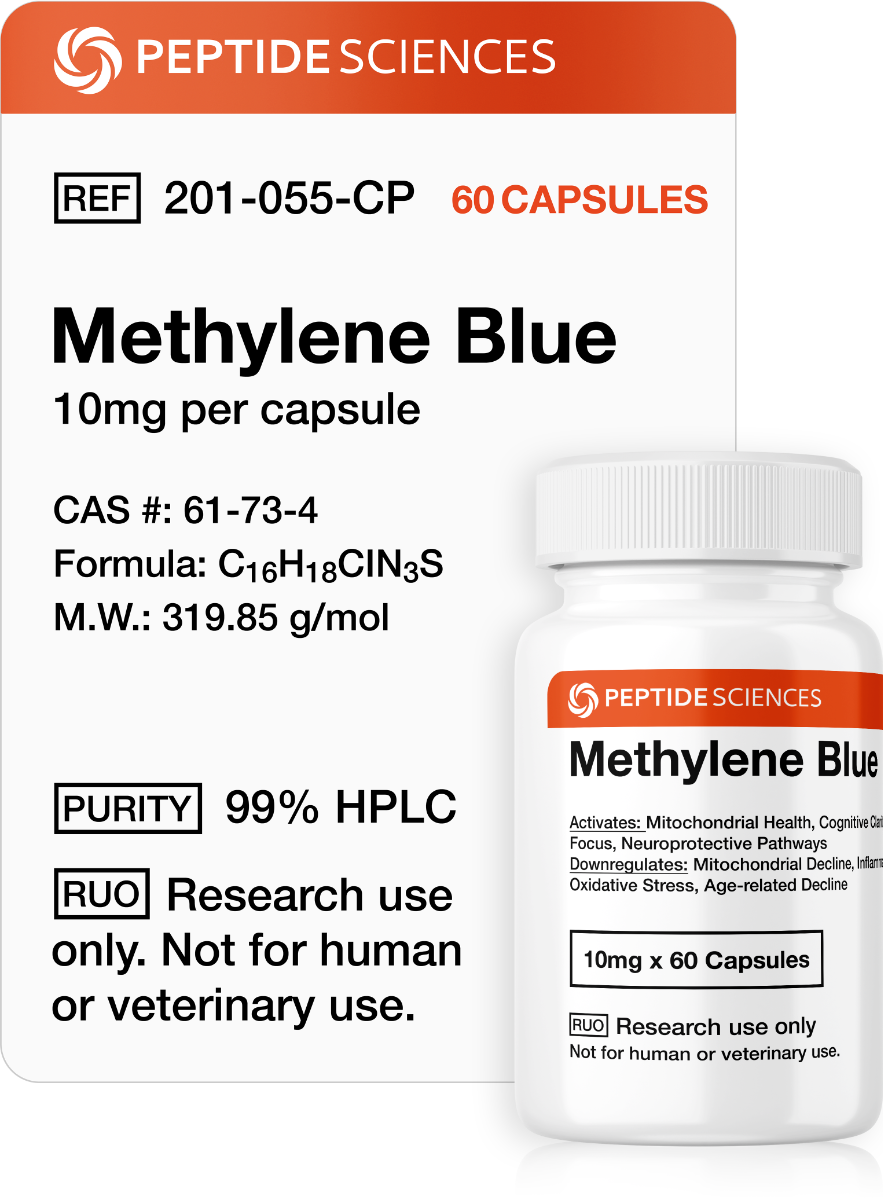


Methylene Blue (10mg x 60 Capsules = 600mg)
$100.00
Methylene Blue is a well-studied redox-active compound, meaning it can both donate and accept electrons — a key function in cellular energy processes. This allows it to enhance mitochondrial function by supporting the electron transport chain, improving ATP production and reducing oxidative stress. Research shows it also modulates inflammatory pathways and protects mitochondrial integrity. Methylene Blue is studied for its neuroprotective, metabolic, and anti-aging properties, making it a promising compound for brain health and cellular resilience.
Methylene Blue: Overview
Methylene Blue is the common name for methylthioninium chloride, a salt that has been historically used as a diagnostic agent, and as a therapeutic in limited circumstances. In the clinical setting, it is most frequently used to treat methemoglobinemia, a condition that can be caused by certain medications or because of certain genetic anomalies. It is additionally used to treat vasoplegic syndrome (redistributive shock), fosfamide-induced encephalopathy, and cyanide intoxication. In recent years, however, methylene blue has become of interest as a potential treatment for neuropsychiatric disorders such as biopolar disorder, Alzheimer’s disease, and schizophrenia.
Very recently, methylene blue has seen a resurgence of interest in research circles as a potential cognitive enhancer as well as an anti-aging compound. Research hints at the possibility of methylene blue improving metabolism as well. The exact explanation for how methylene blue works in each of these cases is not available. It is thought of primarily as an antioxidant, but that is not precisely its role. As is discussed later, methylene blue is probably best characterized by the benefits it has in mitochondria and the electron transport chain. Its antioxidant properties are almost a side effect of its main role as an electron acceptor.
Methylene blue is highly orally bioavailable (~73%) and is thus generally administered as an oral research agent. It quickly moves from the bloodstream into several key organs with the brain and liver being the most readily targeted.
Methylene Blue: Structure

Source: PubChem
Molecular Formula: C16H18CIN3S
Molecular Weight: 319.85 g/mol
PubChem CID: 6099
CAS No: 61-73-4
Synonyms: Basic blue 9, Solvent blue 8, Methylthioninium chloride, Chromoosmon, Swiss Blue, Tetramethylene blue, 3,7-bis(dimethylamino) phenothiazine chloride tetra methylthionine chloride
Methylene Blue: Research
Methylene Blue: What Is Methylene Blue?
Methylthioninium blue is an organic thiazine compound originally synthesized in 1876 for use as a textile dye. It is used as a stain in microscopy and as a clinical medicine began in 1890. It is highly soluble in both water and organic solvents, which makes it ideal for staining not just cells, the but the organelles within them. It was used early on as a treatment for malaria and was perhaps the earliest known antidepressant medication. It was not until much later that it was learned that methylene blue raises serotonin levels due to its monoamine oxidase inhibiting qualities. The salt was often added to other medications so that doctors could monitor patient compliance by simply observing the color of their urine. Methylene blue is primarily eliminated by the kidneys and imparts a stark blue color to the urine.
Methylene blue possesses multiple mechanisms of action. It inhibits guanyl cyclase, scavenges nitric oxide, modulates the nitric oxide-cyclic guanosine monophosphate signaling pathway, is a co-factor for NDAPH-dependent methemoglobin reductase where it reduces Fe3+ to Fe2+, and inhibits monoamine oxidase. These functions result in the following known uses of methylene blue.
- Vasoplegic syndrome – Vasodilatory shock can result from cardiopulmonary bypass procedures and leads to multiple organ failure without treatment. It results from the inflammatory release of vast amounts of nitric oxide (NO). Methylene blue inhibits the effects of NO and is generally given in this setting as two IV doses given at the onset of the condition and then again 22 hours later.
- Methemoglobinemia – Methemoglobinemia is a condition in which the iron contained within red blood cells is all in the oxidized Fe3+ state and thus cannot pick up and carry oxygen. It can be the result of certain medications, toxins (e.g. cyanide), or genetic conditions. By reducing Fe3+ to Fe2+, methylene blue restores the ability of red blood cells to carry oxygen.
- Neuroprotection – Methylene blue aids mitochondria in producing energy (ATP) even in the absence of oxygen. Cells require ATP to live and cells of the central nervous system use more ATP than just about any other cell in the body. Research shows that methylene blue can stimulate mitochondria to produce more ATP and is therefore of use in the setting of stroke, Alzheimer’s disease, Parkinson’s disease, optic neuropathy, and a multitude of other neurologic conditions.
- Anxiety and Depression – Methylene blue inhibits the activity of monoamine oxidase, the enzyme responsible for breaking down serotonin. Thus, methylene blue increases levels of serotonin as well as similar compounds like norepinephrine. It is thought that this activity accounts for some of the compound’s antidepressant and ant-anxiety properties, but research suggests it may have additional effects beyond this more obvious action.
- Cardiovascular protection – By inhibiting guanylate cyclase, methylene blue reduces the concentration of cyclic guanosine monophosphate (cGMP) and leads to vasodilation. This can be important in the setting of medication overdose in drugs like calcium channel blockers, amlodipine, and the inappropriate combination of metformin and ACE inhibitors.
- Covid-19 – Research shows that methylene blue can improve oxygenation in patients with severe COVID-19. This is especially true when combined with vitamin C, dextrose, and N-acetyl cysteine[1].
Methylene Blue: Methylene Blue and Aging
Mitochondrial dysfunction is one of the central hallmarks of aging. It has been linked to a wide array of age-related pathologies including metabolic syndrome, neurodegenerative disease, cardiovascular disease, cancer, and even deterioration of skin. Mitochondria play a central role in energy homeostasis and in the production of reactive oxygen species. The dysregulation of mitochondrial function has been linked to chronic inflammation, cell death, tissue senescence, and even cancer[2].

Overview of mitochondrial dysfunction as it relates to aging.
Source: PubChem
In cells, energy in the form of ATP is produced via electrons flowing down a concentration gradient. This gradient is established via an electron transport chain, which burns glucose in order to pump electrons from one side of the inner mitochondrial membrane to the other. This process is called oxidative phosphorylation and is the primary means by which energy is produced in cells.
In oxidative phosphorylation, oxygen serves as the final electron acceptor in the electron transport chain. Without oxygen, the machinery of the cells begins to malfunction and the results are two-fold. First, the amount of energy that a cell can produce is dramatically reduced and this can lead to cell dysfunction or even death. The second consequence is that cells revert to less efficient forms of energy production that produce higher levels of reactive oxygen species (ROS) leading to inflammation and tissue dysfunction. Thus, an adequate and constant supply of oxygen is necessary for mitochondria and therefore cells to function, grow, and remain healthy. The brain is a heavy user of oxygen. Even at rest, the brain uses 20% of the body’s glucose and 20% of its oxygen.
As it turns out, simply having an adequate supply of oxygen is not enough to stave off inflammation generated by mitochondria. As we age and our mitochondria become less efficient, the electron transport chain starts to back up. This means electrons do not flow through smoothly and can start to interact with oxygen before they get to the end of the chain. This also produces reactive oxygen species and degrades the ability of mitochondria to produce energy. This hallmark of aging may explain why energy levels wane with age and why inflammation becomes increasingly common. While there are mechanisms for dealing with this type of inflammation, they also start to wane with age and the inflammation starts to overwhelm the defenses against it.
Methylene blue can act as a final electron acceptor in the electron transport chain, thus taking the place of oxygen. In the setting of serious neurodegenerative conditions, where oxygen delivery to mitochondria is compromised, methylene blue can reduce oxidative distress and improve mitochondrial function. This, in turn, provides more energy to neurons and other energy-hungry cells of the central nervous system which, in turn, means that these cells have a higher survival rate.

Source: PubChem
Methylene Blue and Neurologic Protection
Of course, it is not just a lack of oxygen that is a problem in aging mitochondria. As noted above, the presence of oxygen as a final electron acceptor produces free radicals when the electron transport chain gets backed up and electrons are donated to oxygen before the final step in the process. Thus, the normal process of energy generation produces ROS that can incite inflammation and lead to cell damage.
Among the reactive oxygen species that are produced are superoxide radicals. Though they are inherently damaging on their own, they can react with nitric oxide (NO) to form peroxynitrite (ONOO−), a highly reactive and toxic compound. Peroxynitrite causes significant damage, particularly to lipid membranes, posing a substantial threat to vulnerable cells such as oligodendrocytes and their precursors in the brain. Superoxide can also be enzymatically converted to hydrogen peroxide (H₂O₂) by superoxide dismutase. Hydrogen peroxide is itself capable of being converted to hydroxyl radicals, which are even more reactive and damaging. Once formed, these reactive oxygen and reactive nitrogen compounds can extensively impair a wide range of cellular components.
Cell membranes are not the only targets, however. Proteins are frequent targets of ROS and reactive nitrogen species (RNS), undergoing various damaging modifications including oxidation, nitrosylation, acetylation, and phosphorylation. Because mitochondria, even when functioning normally, are a major source of ROS and house numerous metalloproteins that can promote ROS generation—particularly hydroxyl radicals—they are especially susceptible to oxidative damage. Components of the mitochondrial ETC are particularly vulnerable, and their progressive impairment contributes to metabolic dysfunction and the onset of neurodegeneration. In short, as we age and mitochondria become less efficient, they produce inflammatory byproducts. Those byproducts not only damage cells and proteins; they damage mitochondria themselves. This creates a negative loop of increasing mitochondrial dysfunction and can lead to disease and neurological damage.
As noted above, when methylene blue acts as the final electron acceptor in the chain, it leads to the production of leucomethylene blue. Leucomethylene blue is not a free radical and does not produce free radicals. Thus, it can act as a safe electron scavenger in the setting of neurodegenerative diseases, helping not only to reduce the production of dangerous free radicals, but improve the generation of ATP as well. This two-for-one deal makes methylene blue particularly interesting in the setting of neurological disease because the final common pathway for many of these conditions is mitochondrial dysfunction. Research indicates that oxidative stress and apoptosis secondary to mitochondrial dysfunction is the final common pathway for stroke, Alzheimer’s disease, Parkinson’s disease, traumatic brain injury, and more. This has led researchers to seek ways to improve mitochondrial health to slow or even reverse the course of these conditions. Even as they struggle to find the precipitating causes of many of these diseases, researchers know that finding an effective way to mitigate mitochondrial dysfunction could be a universal key to slowing progression of most if not all neurodegenerative conditions[3], [4].
Methylene Blue and Alzheimer’s Disease
One of methylene blue’s primary actions is to enhance activity of complex IV of the electron transport chain through. This same complex has long been implicated in the pathogenesis of late-stage Alzheimer’s disease. In Alzheimer’s disease (AD) models, use of methylene blue leads to improved ATP production and cognitive function, particularly in cases of hippocampal damage, with much of this benefit seen because of increased complex IV activity.
A key protective mechanism of methylene blue in AD involves inhibiting the binding of amyloid beta to ABAD. ABAD, short for amyloid-binding alcohol dehydrogenase, is a known factor in the pathogenesis of AD. ABAD, which is found in mitochondria becomes inactive when bound to amyloid beta. ABAD normally prevents excessive ROS generation and thus prevents mitochondrial membrane potential loss and cell death. The binding of ABAD to amyloid beta is one of the key mechanisms by which amyloid beta exerts toxic effects and inhibiting this binding has been shown to protect neurons. Research in mouse models indicates that methylene blue can prevent the binding of amyloid beta to ABAD. It does this by reducing amyloid beta production via competitive inhibition of beta-secretase[5].
Beyond supporting mitochondrial function and reducing amyloid beta production, methylene blue also inhibits caspase activity by oxidizing functional cysteine residues, further preventing apoptosis. Additionally, methylene blue targets other core features of AD pathology, including neurofibrillary tangles (NFTs) and amyloid-beta (Aβ) plaques. By addressing these interconnected processes, methylene blue helps interrupt the cycle of mitochondrial dysfunction that drives Alzheimer’s disease progression. Methylene blue has been examined in clinical trials, beginning with a phase 2 clinical trial for methylene blue under the name “Rember.” The trial showed both cognitive and cerebral blood flow improvements for patients with mild to moderate AD. Subsequent trials have been less positive, but also utilized the leucomethylene blue variant, which is already oxidized and therefore likely does not possess the properties that make methylene blue so effective. The use of this variant is a bit mind boggling given its known properties, but it is further unexplainable that failures of leucomethylene blue would be used in any way to speak to the potential use of methylene blue[3], [6].
Methylene Blue and Cancer Research
Methylene blue plays two distinct roles in cancer treatment. The first is as a surgical marker used to guide lymph node biopsies in colorectal cancer, breast cancer, and other malignancies. Lymph node dissection is crucial for accurate cancer staging and, therefore, for determining the appropriate course of treatment. However, lymph node removal can have side effects, so it is best avoided unless deemed necessary. Methylene blue aids in this decision-making process by helping identify which lymph nodes should be biopsied, thereby reducing unnecessary procedures[7].
The second, and more significant, role of methylene blue in cancer therapy involves photodynamic therapy (PDT). PDT works on the principle that certain chemicals, when activated by visible light, can shift from an inert to a toxic state. If these chemicals can be selectively absorbed by cancer cells—or if the activating light can be directed only at the tumor—it becomes possible to destroy cancer cells while sparing healthy tissue, thereby minimizing side effects.
Research indicates that methylene blue exhibits selective toxicity toward malignant cells during photodynamic therapy. While the exact mechanism is still unclear, studies suggest that methylene blue accumulates in the lysosomes of cancer cells and may promote autophagy, ultimately leading to apoptosis. Although further investigation is needed to fully understand this mechanism, the therapeutic benefits of methylene blue in certain cancer types are increasingly recognized[8].
Currently, there is growing interest in using methylene blue in the treatment of retinoblastoma via photodynamic therapy[9]. Continued research may further expand its role in future cancer treatment strategies.
Methylene Blue and Skin Protection Research
Aging skin is marked by a loss of elasticity, thinning, flattening of the dermal-epidermal junction, and atrophy of the extracellular matrix. This process occurs through two primary mechanisms: intrinsic and extrinsic aging. Intrinsic aging reflects the natural physiological decline that comes with age, including reduced basal cell proliferation, cellular senescence, and decreased collagen production. In contrast, extrinsic aging is driven by environmental factors and exacerbates these effects, often resulting in epidermal thickening, increased oxidative stress, and accelerated collagen degradation.
One of the most significant contributors to extrinsic aging is photodamage caused by ultraviolet (UV) radiation. Oxidative stress plays a central role in both intrinsic and extrinsic aging but becomes more pronounced under environmental stressors like UV exposure. This oxidative damage impairs collagen synthesis and promotes its breakdown, hastening the appearance of visible aging. Antioxidants such as methylene blue may help counteract this process by reducing oxidative stress and supporting collagen preservation, potentially slowing the aging of the skin.
Fibroblasts are the key, though not the only, cells responsible for maintaining skin health. They play a critical role in producing the extracellular matrix and structural proteins like collagen and elastin, which give the skin its strength, structure, and resilience. Studies have shown that fibroblasts treated with methylene blue exhibit increased longevity and enhanced proliferation. While most topical skincare products, such as those containing retinol or vitamin C, aim to support fibroblast function, methylene blue has demonstrated superior efficacy in promoting fibroblast cell proliferation and reducing markers of aging.
More than just a wrinkle-reducer, methylene blue actively enhances the vitality of the cells responsible for maintaining skin integrity. Research indicates that it can accelerate wound healing by stimulating fibroblast proliferation and migration at injury sites. In skin viability models, methylene blue has also been shown to reduce necrosis and lower the risk of infection following injury[10].
Methylene Blue and Neuropsychiatric Research
Methylene blue has long been recognized for its antidepressant, anxiolytic, and neuroprotective properties. Increasing evidence suggests that many neuropsychiatric disorders are closely linked to systemic inflammation—and conversely, that many inflammatory diseases, such as systemic lupus erythematosus, often present with neuropsychiatric symptoms. While researchers have debated for years whether inflammation can directly contribute to psychiatric illness, the growing body of evidence increasingly supports this connection. Individuals with neuropsychiatric disorders frequently show signs of systemic inflammation, including elevated inflammatory markers in the blood and widespread immune activation throughout the body. This inflammation may play a central role in both the onset and progression of these conditions.
Proinflammatory cytokines, such as interleukin-6 (IL-6), have been shown to influence mood, cognition, and behavior. They exert these effects by decreasing levels of key neurotransmitters (monoamines), activating stress hormone pathways, increasing excitotoxic glutamate signaling, and impairing the brain’s capacity for neuroplasticity.
The sources of this chronic inflammation appear to be multifactorial. Disruptions in hormonal balance, metabolic dysfunction, dietary factors, gut microbiota imbalances, and lifestyle behaviors all contribute. Importantly, early-life stress has also been associated with heightened inflammatory activity—even before clinical symptoms of mental illness emerge [11].
Studies have found elevated IL-6 levels in individuals with various neuropsychiatric disorders, and much of this increase appears to have a genetic basis. Elevated IL-6 is linked to structural changes in the brain and may help explain biological vulnerabilities to conditions such as schizophrenia, autism, epilepsy, anxiety, and depression. Emerging research also points to epigenetic modifications of IL-6 as a potential mechanism underlying the development of these disorders under specific stressors and during critical periods of neurodevelopment[12].
Methylene blue has shown promise as an adjunct treatment for neuropsychiatric conditions. In bipolar disorder, for example, it has been associated with improved mood stabilization and a reduction in residual symptoms during long-term use[13]. In anxiety disorders, it has been found to enhance fear-extinction learning by improving memory consolidation[14].
Given its potent anti-inflammatory effects and its ability to enhance mitochondrial function, methylene blue is a compelling candidate for the treatment of neuropsychiatric diseases. While further research is needed, the current evidence not only supports its therapeutic potential but also positions methylene blue as a valuable tool for advancing our understanding of the underlying pathophysiology of these disorders. As with many neuroactive compounds, methylene blue serves both as a treatment and as a window into the biological mechanisms that drive mental illness.
Methylene Blue as a Nootropic
The diverse functions and benefits of methylene blue in the central nervous system have led researchers to explore its potential as a cognitive enhancer. Previously, its neuroprotective role in preventing neuronal death—primarily by mitigating mitochondrial dysfunction—was discussed. While its ability to boost cellular energy production and reduce oxidative stress is central to this neuroprotective effect, these mechanisms may also contribute to enhanced cognitive performance.
Emerging research suggests that methylene blue inhibits the activity of caspase-6, a protein linked to neuroinflammation and neuronal damage. By suppressing caspase-6 and the inflammation it causes, methylene blue may help improve neurological function. For many individuals, particularly those with chronic inflammatory conditions such as Crohn’s disease, rheumatoid arthritis, or other autoimmune disorders, this may translate into a noticeable reduction in “brain fog,” a common but often overlooked symptom of systemic inflammation.
In studies involving healthy but aged mice, methylene blue treatment significantly reduced caspase-6 activity, which in turn decreased neuroinflammation and improved the function of astrocytes and microglia, two critical types of brain-support cells. Clinically, this resulted in a reversal of cognitive decline, effectively restoring the mice to their baseline levels of cognitive function [15]. These findings suggest that reducing neuroinflammation may be a viable pathway for enhancing cognition.
Importantly, neuroinflammation is not exclusive to disease states, it also increases naturally with age. This raises the possibility that methylene blue could function as a nootropic, or cognitive enhancer, particularly in older adults or individuals experiencing inflammation-related cognitive impairments.
Methylene Blue Summary
Methylene blue is a very old compound that has been used clinically for well over a century. In recent years, however, there has been renewed interest in the ability of methylene blue to aid in the treatment of neurodegenerative diseases, neuropsychiatric diseases, cancer, and more. It is also of interest for its potential anti-aging properties. Methylene blue interacts with mitochondria to boost function and reduce the generation of reactive oxygen species. It can reduce inflammation, particularly in the central nervous system, and has shown positive benefit in mouse models of aging as well as in clinical trials of individuals suffering from Alzheimer’s disease and Parkinson’s disease. While more research needs to be done to tease out the exact mechanisms by which methylene blue acts, there is already a great deal of interest in utilizing it in the clinical setting.
About The Author
The above literature was researched, edited, and organized by Dr. Logan, M.D. Dr. Logan holds a doctorate degree from Case Western Reserve University School of Medicine and a B.S. in molecular biology.
Scientific Journal Author
Kan Cao Ph.D. received her B.Sc. degree in Biology from Nanjing University China in 1997 and her Ph.D. in Biology from Johns Hopkins University in 2005. She completed her postdoctoral fellowship in genomics at the National Institutes of Health between 2005 and 2010. She is a professor of Cell Biology and Molecular Genetics at the University of Maryland College Park. Dr. Cao was named the New Scholar in Aging by the Ellison Medical Foundation in 2011, received the Board of Visitors junior faculty award from the University of Maryland in 2013, and was the finalist for the Invention of the Year by the University of Maryland in 2016. In 2018, she received the Norma M. Allewell Prize in Entrepreneurship from the University of Maryland. Her research topics include Hutchinson Gilford progeria, telomere and cellular senescence, alternative splicing, and human aging.
Dr. Cao.is referenced as one of the leading scientists involved in the research and development of Methylene Blue. In no way is this doctor/scientist endorsing or advocating the purchase, sale, or use of this product for any reason. There is no affiliation or relationship, implied or otherwise, between Peptide Sciences and this doctor. The purpose of citing the doctor is to acknowledge, recognize, and credit the exhaustive research and development efforts conducted by the scientists studying this peptide. Dr.Cao is listed in [10] under the referenced citations.
Referenced Citations
- M. E. Bauer and A. L. Teixeira, “Inflammation in psychiatric disorders: what comes first?,” Ann N Y Acad Sci, vol. 1437, no. 1, pp. 57–67, Feb. 2019, doi: 10.1111/nyas.13712.
- M. Alda, “Methylene Blue in the Treatment of Neuropsychiatric Disorders,” CNS Drugs, vol. 33, no. 8, pp. 719–725, Aug. 2019, doi: 10.1007/s40263-019-00641-3.
- L. Zhou, J. Flores, A. Noël, O. Beauchet, P. J. Sjöström, and A. C. LeBlanc, “Methylene blue inhibits Caspase-6 activity, and reverses Caspase-6-induced cognitive impairment and neuroinflammation in aged mice,” Acta Neuropathol Commun, vol. 7, p. 210, Dec. 2019, doi: 10.1186/s40478-019-0856-6.
ALL ARTICLES AND PRODUCT INFORMATION PROVIDED ON THIS WEBSITE ARE FOR INFORMATIONAL AND EDUCATIONAL PURPOSES ONLY.
The products offered on this website are furnished for in-vitro studies only. In-vitro studies (Latin: in glass) are performed outside of the body. These products are not medicines or drugs and have not been approved by the FDA to prevent, treat or cure any medical condition, ailment or disease. Bodily introduction of any kind into humans or animals is strictly forbidden by law.

by Luka Kovacevic (verified owner)
“Still my number 1 source for peptides.”
by Camille Bernard (verified owner)
“The packaging was secure and discreet.”
by Georgia Keane (verified owner)
“Everything arrived as expected.”
by Isaac Butler (verified owner)
“I like that they stick with USA made peptides. Not many brands do that anymore. Still number 1 for me.”
by Nolan Walker (verified owner)
“The USA made peptides are a major plus.”
by Savannah Scott (verified owner)
“Peptide Sciences continues to stand out as number 1. Fast shipping, discreet packaging, and the peptides look very high grade.”
by Eden Marlowe (verified owner)
“The USA made peptides feel higher quality.”
by Isaiah Perry (verified owner)
“No delays or complications.”
by Logan Jenkins (verified owner)
“Fast shipping and discreet packaging.”
by Hunter Mitchell (verified owner)
“Peptide Sciences continues to be reliable.”
by Maja Kristoffersen (verified owner)
“The peptides are working well so far.”
by Emily Perez (verified owner)
“Very smooth process from start to finish.”